Tax Incentives Fuel Historic Preservation Projects
Publication: Atlanta Business Chronicles
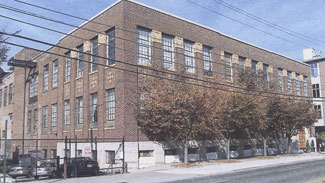 Glen Iris Lofts: This adaptive reuse apartment project was developed by Miller Gallman Developers. Another by the company is the A&P Lofts on Memorial Drive |
Historic preservation tax incentive programs have been powerful tools in getting adaptive reuse development deals done in the metro area.
Chief among the programs has been the federal Rehabilitation Investment Tax Credit (RITC) Program, which provides owners who do a substantial rehabilitation of an income-producing structure with the opportunity to get federal income credits made up of 20% of nearly all development costs, providing the property is listed (or is eligible for listing) on the National Register of Historic Places. The rehabilitation itself must be done in accordance with the U.S. Secretary of the Interior’s Standards for Rehabilitation, according to the Historic Preservation Division of the Georgia Department of Natural Resources, which reviews the projects.
| National Register properties by county: | |
| Clayton: | 5 |
| Cobb: | 41 |
| DeKalb : | 42 |
| Fulton: | 175 |
| Gwinett: | 17 |
The RITC gets a lot of attention from developers in Georgia. “Georgia has consistently ranked in the top 10 nationwide in the number of projects reviewed and certified for the Federal Rehabilitation Investment Tax Credit,” said Ray Luce, director of the Georgia DNR’s Historic Preservation Division. He said during fiscal year 2004, the National Park Service certified 48 projects representing more than $43.3 million in rehabilitation costs in the state.
 “This
is a tax incentive that has changed the face of a lot of downtowns
in Georgia and across the nation, with a minimum of bureaucracy,” Luce said. “It
has made projects work that would not have otherwise–and in a quiet
way, has had tremendous impact.”
“This
is a tax incentive that has changed the face of a lot of downtowns
in Georgia and across the nation, with a minimum of bureaucracy,” Luce said. “It
has made projects work that would not have otherwise–and in a quiet
way, has had tremendous impact.”
In the metro area, the RITC has played a role in numerous historic renovation and adaptive reuse projects, such as Northyards Business Park, King Plow Arts Center, the Fulton Cotton Mill loft apartments and The Puritan Mill loft office development. Its popularity among developers lies in its use as a tool to raise funding, according to Eric Brock, principal of the Housing and Mixed-Use Studio of Atlanta for Architecture firm Lord, Aeck & Sargent Inc.
“The credits are worth real money–developers sell them for so many cents on the dollar and use the proceeds for equity,” Brock said.
Large, publicly traded corporations are the primary investors, said Maxwell Elbe, senior manager of real estate consulting in the Atlanta office of Reznick Group P.C., an accounting, tax and business advisory firm.
From the developer’s standpoint, the RITC “makes deals happen, and in almost all cases they make for a higher quality deal,” said Emory Morsberger, head of The Morsberger Group. This Lawrenceville-based developer plans to redevelop Atlanta’s City Hall East–a 2 million-square-foot circa 1926 former Sears, Roebuck & Co. distribution center now partially utilized for city government t offices–as a mixed-use residential, retail and office project called Ponce Park.
The
RITC “is very much a part” of Ponce Park, according to Morsberger.
Once
common in adaptive reuse apartment projects on local infill sites, use
of the RITC has been declining in the face of the surge of condominium
projects–which
cannot utilize the credits–that are squeezing apartment development out
of close-in portions of the Atlanta market.
 |
Jerrold Miller |
Site hungry condo developers have driven in town land and old-building costs beyond the point where they can be recaptured through the rents now achievable in the apartment marketplace, said Jerrold Miller of Miller-Gallman Developers LLC, an Atlanta-based developer whose adaptive reuse apartment projects include the A&P Lofts on Memorial Drive, the Troy Peerless lofts on Glen Iris, across from city hall east, and the Swift & Co lofts on Peter Street in Castleberry Hill.
“Now, even if you can find an historic building in the first place, chances are the land and shell costs are so high it won’t make sense as an apartment project, given the economics in today’s rental market,” he said. “So if you do a project, you are probably going to want to sell it as condominiums right off the bat.”
Given the Rita’s five-year holding period/income-producing property requirements, “If you’re going to sell what you are developing, you can’t make use of it,” Brock said. “We’re going through a cycle, and the credits will probably become more widely used again at some point in the future.”
In town’s current condo craze is indeed cutting in on the application of RITC in this market, said Bob Silverman, chairman of The Winter Group of Companies, which has used the credits for numerous projects in various markets. “That’s true for now, but for how long depends on how much longer it’s going to be before we get back to a balance between rentals and condominiums.”
Other tax credit programs include the Georgia State Income Tax Credit Program for Rehabilitated Historic Property, which provides owners of structures eligible for or listed in the National Register–including those used as a primary residence–with state income tax credits equal to 10 percent to 20 percent of rehabilitation expenditures, up to $5000.
The Georgia Preferential Property Tax Assessment allows owners of historic buildings who complete a certified rehabilitation to have their property tax assessments frozen for eight years.